
You just had a great discovery call. The client loves your portfolio, they have the budget, and they end the call with: "Send over a proposal by tomorrow."
For many freelancers and agency owners, this is where the panic sets in. You open up Google Docs or Microsoft Word, stare at a blank page, and try to remember how you formatted the last one. Two hours later, you've created an inconsistent, messy document that doesn't reflect the premium quality of your actual work.
Your proposal is the final hurdle before getting paid. It needs to look professional, it needs to be easy to read, and most importantly, it needs to close the deal.
The anatomy of a winning freelance proposal
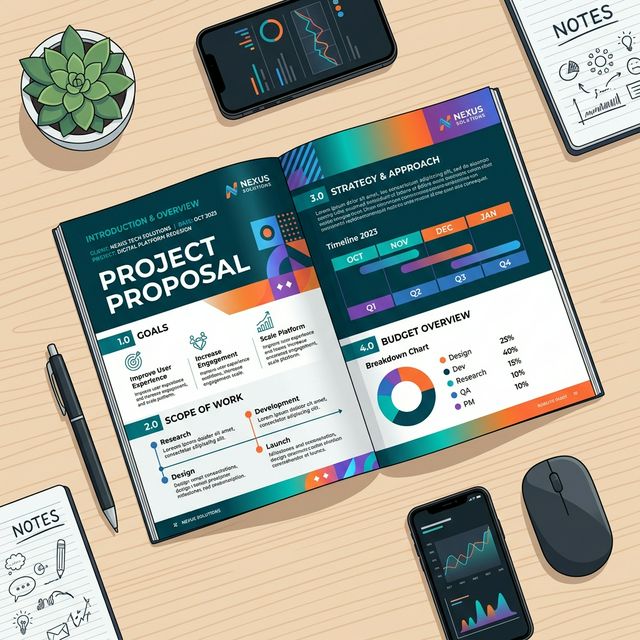
A good proposal doesn't need to be 15 pages long. In fact, most clients prefer brevity. They want to know three things: Do you understand their problem? How will you solve it? How much will it cost?
Here is the exact structure you should use:
1. The Executive Summary
Don't start talking about yourself. Start by summarizing their problem and their goals. This proves that you were actually listening during the discovery call.
Good: "Acme Corp is losing 40% of checkout traffic on mobile. This project will redesign the checkout funnel to increase conversion rates and boost mobile revenue."
Bad: "I am a seniorUX designer with 10 years of experience making beautiful apps..."
2. The Scope of Work
Be specific about what is included. More importantly, be specific about what is not included. This is your defense against scope creep later in the project.
Instead of writing "Website Design," write:
- 1x Homepage design (Figma)
- 4x Interior pages (About, Services, Contact, Blog layout)
- 2x Rounds of revisions per page
3. Investment (Pricing)
Don't hide your pricing at the very bottom in tiny text. Present it clearly in an itemized table. We highly recommend grouping your pricing by "Phases" rather than hourly rates, as it focuses the client on the value of the deliverables rather than clock-watching.
4. Timeline and Next Steps
Tell them exactly what happens next. When will the project start? How long will it take? What do they need to do right now to kick things off?
"To get started, a 50% deposit is required. Once paid, we will begin the Discovery Phase on Monday."
The fastest way to create your proposal
If you want to stop fighting with document formatting, we built a Free Freelance Proposal Generator.
It is completely free to use—no account required. You simply fill in the text fields for your Executive Summary, Scope, and Line Items, and it automatically generates a perfectly formatted, beautiful PDF that you can save and send directly to your client.
Try the free Proposal Generator here.
You won the client. Now what?
Getting the "Yes" is just the beginning. The real work is managing the project and, crucially, managing client feedback.
If you hate chasing clients over email to get them to approve your deliverables, you need to streamline your approval process. TryApprove gives you a white-labeled client portal where you can share your work via a simple magic link. Clients can view your deliverables and click "Approve" with one click—no sign-ups required.
Create your free TryApprove portal today and make client approvals boring again.